


Holy guacamole – Digital PR is on everyone’s minds right now! Between Google’s helpful content updates, AI search engines, and AI overviews in Google, it’s clear that it’s more important than ever to build your brand online and find additional sources of traffic. A smart PR strategy can help drive traffic, improve search engine rankings, and support your ongoing SEO efforts.
And, as you might imagine, as soon as Digital PR comes up in a conversation, the idea of a press release bubbles to the top of the list.
How Press Releases Strengthen a Digital PR and SEO Strategy
Press releases help brands share newsworthy updates while strengthening overall SEO visibility through earned media and backlinks. When combined with social, influencer, or content marketing strategies, they become a powerful complement to your digital PR efforts.
At one point, sending out a press release was a sure-fire way to inject visibility, backlinks, and brand awareness online. However, as the tactic became overused and spammy, search engines like Google began devaluing low-quality or non-newsworthy press releases.
That means today’s press releases only drive SEO impact when they are genuinely newsworthy and distributed strategically. At Volume Nine, we help clients incorporate press releases into a holistic PR plan — never as a stand-alone SEO trick.
If you do have real news to share, optimize your press release with relevant keywords, anchor text, and SEO best practices. But don’t send out generic, low-value press releases hoping for quick SEO gains — that approach wastes time, effort, and budget.
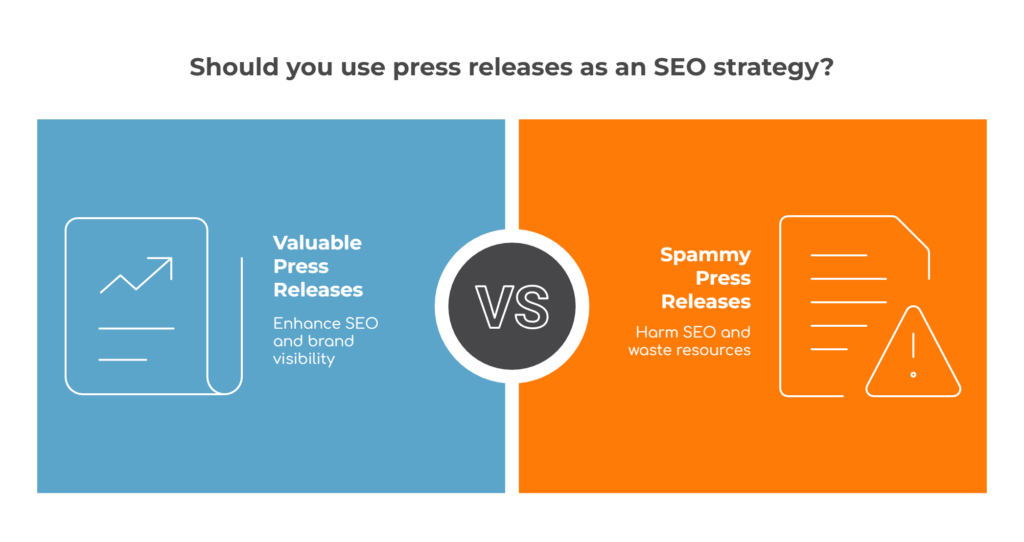
What to Ask Before Writing a Press Release: Is It Newsworthy and Necessary?
Before writing, submitting, or distributing a press release, ask yourself two key questions to ensure your content is worth publishing.
1. Do people outside your company need to know about this topic?
Only create a press release when you have something newsworthy to say. Think of it like this: “If you don’t have anything newsworthy to say, don’t write a press release at all.”
For example:
- A prettier new website design? Probably not newsworthy.
- Clearer service offerings or a rebrand relevant to your local market? Possibly newsworthy.
- A new tool, template, or infographic that adds public value? Definitely newsworthy and shareable.
2. Is a press release the right format for your announcement?
Once you’ve confirmed your topic is relevant, make sure a press release is the right channel. It works best for:
- Major company updates or product launches
- Newsworthy events or partnerships
- Announcements that could genuinely attract media coverage
If your update is minor, consider a blog post, social announcement, or email campaign instead.
What Are the SEO Benefits of Press Releases When Done Right?
The biggest SEO benefit of press releases is indirect — not direct — impact. While a press release itself rarely ranks high in search results, its ripple effects can be powerful.
Here’s how press releases indirectly support SEO:
- Natural backlinks: Media pickups or blog coverage can earn high-quality links that improve your domain authority.
- Brand visibility: Appearances in SERPs and Google News build brand awareness.
- Referral traffic: Even no-follow links can drive traffic and signal credibility to search engines.
Occasionally, a press release may rank directly in Google News or organic search results, but the long-term SEO value comes from visibility, backlinks, and engagement across the web.
Who Should You Write Your Press Release For — People or Search Engines?
Always write your press release for people first. Focus on human readers and journalists, not search bots.
- End audience: Write with your target reader in mind — those genuinely interested in your announcement.
- Journalists: Provide value and clear angles that make their stories easier to write.
- SEO caution: Non-newsworthy or spammy content can harm your brand credibility and SEO performance.
Press releases succeed when they sound human, tell a real story, and provide useful, relevant information.
How Should You Use Keywords in a Press Release Without Hurting Authenticity?
Keywords should support your message — not dominate it. Always start with your topic and angle first, then layer in a relevant keyword naturally.
If using a keyword makes your release sound robotic, drop it. Authentic, audience-first writing performs far better than keyword-stuffed copy.
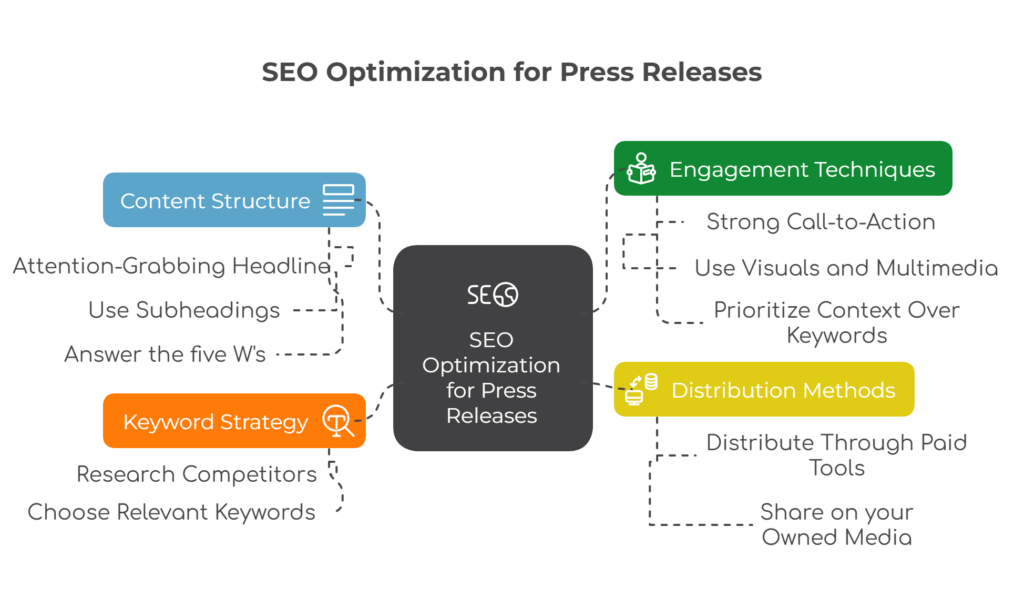
How to Optimize a Press Release for SEO Without Overdoing It
Light optimization helps your press release gain visibility without compromising readability. Aim for balance, not over-optimization.
Best practices for optimizing a press release for SEO include:
- Keep it concise — around 500–600 words.
- Perform keyword research and use your target phrase in the headline, first paragraph, and one anchor link.
- Use semantic keywords and related phrases naturally throughout.
- Include one to two internal links that add context or value.
- Add multimedia elements like images or infographics to boost engagement and visibility in search results.
Helpful SEO Tools for Optimization:
These tools can refine your keyword strategy and strengthen topical relevance — just avoid “auto optimize” features that may strip away authenticity.
“Optimized press releases increase online visibility by roughly 52% compared to non-optimized releases, and their real power is in generating high-quality backlinks and brand mentions, not quick ranking wins.”
— Alexandra Tachalova, SEO Consultant & Digital PR Expert
How Anchor Text and Links in a Press Release Affect SEO
Anchor links contribute to a press release’s SEO value by directing users to relevant resources and signaling topical authority.
Keep your linking strategy simple:
- Use two to three links per 500 words.
- Ensure links lead to relevant, valuable pages.
- Use descriptive anchor text instead of vague terms like “Click here.”
- Include a clear call-to-action, such as encouraging readers to visit your site or contact you for more information.
Which Press Release Distribution Services Offer the Best Reach?
For the widest reach and credibility, invest in professional distribution through established newswires. Paid distribution helps ensure your announcement is seen by legitimate outlets and journalists.
Here are trusted distribution options:
- PRWeb – Pricing starts at $110 per release
- PR Newswire – Annual $195 membership + $325 per release
- PR.com – Pricing starts at $60 per release
- Business Wire – Pricing starts at $2,595 for 5 press releases
While free submission sites exist, paid services amplify reach, credibility, and SEO impact.
Summary – Do Press Releases Still Work for SEO?
Despite ongoing debates about their value, using press releases can still be a powerful tool for SEO if they provide value to readers and align with your PR strategy. When well-written and optimized, they can generate backlinks, media coverage, and organic traffic, improving your overall search engine optimization results.
Press releases shouldn’t be your only tactic, but they can be an effective part of a broader SEO strategy that includes social media, bloggers, and outreach. A well-crafted, SEO-friendly, optimized press release can help you stay visible, relevant, and connected in a competitive digital world.
Common Questions About Using Press Releases for SEO
1. Do press releases help with SEO rankings?
Yes, but mostly indirectly. They improve visibility through backlinks, media mentions, and referral traffic when focused on newsworthy, keyword-relevant topics.
2. How do I optimize a press release for SEO?
Use relevant keywords naturally, include strategic anchor links, and keep content concise (500–600 words). Add multimedia to boost engagement.
3. What makes a press release SEO-friendly?
It’s informative, written for humans first, includes target keywords, relevant hyperlinks, and ends with a clear call-to-action.
4. How many links should I include in a press release?
Limit to two or three per 500 words. Each link should serve a purpose — context, value, or a CTA.
5. Do I need to pay for press release distribution?
Free sites exist, but professional services like PRWeb or PR Newswire offer more credibility and reach.
6. Should I issue press releases for every company update?
No. Reserve them for meaningful, newsworthy announcements like product launches or partnerships.
7. How can I measure the SEO impact of my press release?
Track backlinks, referral traffic, and keyword performance in tools like Google Search Console or SEMRush.
8. Can I include images or videos in my press release?
Absolutely. Multimedia improves engagement and boosts your chance of media coverage.
9. Is it OK to include my phone number in a press release?
Yes — it enhances credibility and helps journalists contact you directly for coverage opportunities.